Furnishing a home office for a new travel agency
A new agency run from a spare room needs less furniture than most people expect, but each piece has to work harder. Here is how to choose the desk, the chair, the storage and the seat for visitors, and where an older carved piece earns its floor space.
This is for anyone setting up a small agency in a spare room at home, usually a travel or booking business, and wondering what furniture has to be bought before the first client arrives. The room has to hold a working day, a paper trail, a place for visitors to sit and, quite often, a heavy inherited desk nobody wants to give away. Below is how to size each piece, what to store where, and how to keep older furniture in a room that also has cables in it.
Start with the desk, not the catalogue
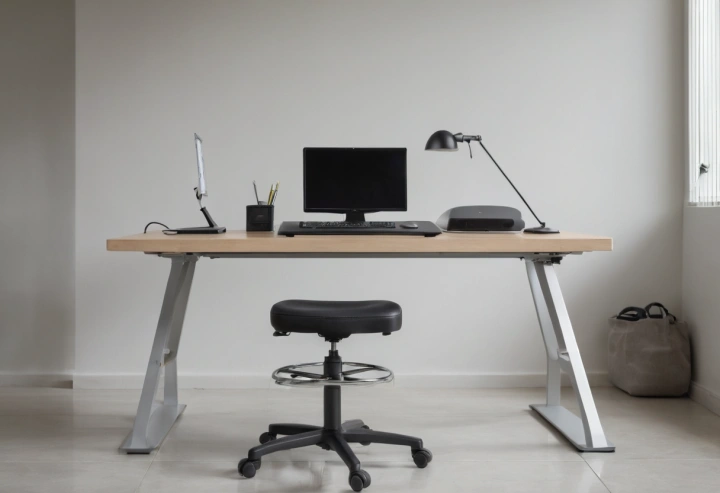
Work out what will live on the surface before choosing anything. For a booking business that usually means a screen or two, a keyboard, a phone, a printer if you keep one, and a clear patch about shoulder width where documents can be spread out and checked. That last part is the one people forget. A desk that looks generous in a showroom becomes cramped once a monitor arm, a lamp and a tray of paperwork have claimed their corners.
Depth matters more than length. A shallow desk pushes the screen close to your face, and by mid afternoon you will be leaning back to read a fare rule. If the room is narrow, take a shorter but deeper desk rather than a long shallow one. Height should let your forearms rest roughly level with the keyboard while your feet stay flat on the floor. Older desks are often a little high for typing, which is solved with a raised chair and a footrest, not by hunching.
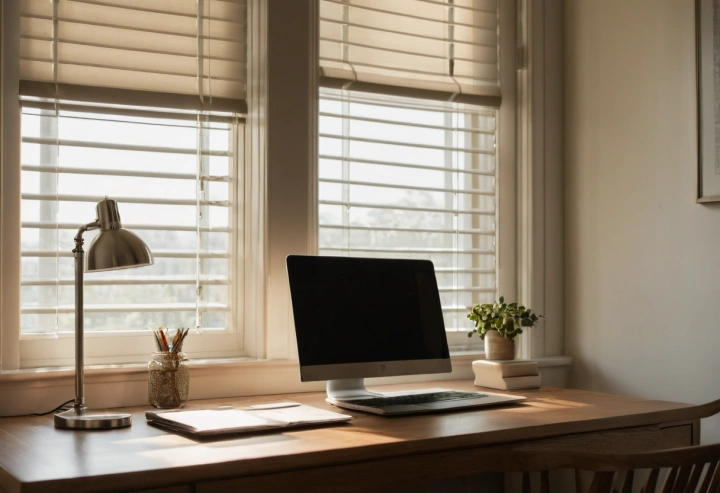
If most of the day goes into a browser based booking system, screen position and chair setting matter more than the desk itself. Our notes on setting up the workstation for running an online booking site all day cover that in detail. Settle the bigger decisions first, though, and the order of decisions for starting a travel agency from home is a sensible place to check that furniture is not being bought ahead of licensing.
The chair you work in is the one to spend on
Spend here before anywhere else. A working chair should adjust for seat height, back tilt and armrest height, and support the small of your back without pushing your shoulders forward. Test it for longer than a minute. Sit as you actually sit, including the slouch you adopt when reading a long itinerary, and see whether the chair still holds you.
Mesh backs suit warm rooms and long hours. Leather and padded executive chairs look right in a formal study and feel pleasant for the first hour, then hold heat. If the room is air conditioned all day this matters less, but a home office in a flat with one small unit is another matter. Whichever you choose, put a mat under the castors if the floor is tile or wood, and check the arms slide under the desk so you can sit close.
Budget guidance for the whole room, including where spending pays off, sits in our piece on budgeting a home office.
Storage and filing for a business that handles documents
A travel agency generates paper even when everything is sold online. Passport copies, visa documents, signed booking forms, supplier agreements, invoices and receipts. Some of it is sensitive and some must be kept for years. Treat storage as two separate problems: things you reach for weekly, and things you keep but rarely open.
For the weekly layer, use shallow drawers or a small pedestal beside the desk, divided so current bookings, blank forms and stationery do not mix. For the archive, use a proper filing cabinet or a closed cupboard with hanging files, labelled by year and then by category. A lockable drawer or cabinet is not paranoia when the room also holds passport scans and card authorisation forms, particularly if family members or cleaners pass through.
A few habits that keep this manageable:
- File by month closed, not by client name, so nothing gets buried in a folder that keeps growing.
- Keep one tray for documents awaiting a signature and empty it every working day.
- Store the current year within arm’s reach and older years higher up or further away.
- Keep a small shredder or a sealed box for disposal, and never leave passport copies in an open tray.
- Photograph or scan anything a client hands over, then return the original promptly.
Bookcases are for reference material, brochures and the things that make the room look like a business. They are not a filing system. Open shelves collect dust in the Gulf, so anything left there should be replaceable or inside a folder.
A chair for clients, and where to put it
Most home based agents meet clients occasionally rather than daily, and one visitor chair is enough. Place it at the side of the desk rather than directly opposite, so both of you can look at the same screen or document without twisting round. Directly across a wide desk feels like an interview; angled at the corner feels like a conversation.
The visitor chair should be upright, firm and easy to get out of. Avoid deep soft seating, and anything with wheels. Give it a small surface of its own, a side table or the clear end of the desk, so a cup or a phone has somewhere to go. Keep the path from the door to that chair free of cables, boxes and printer cartons, and think about what the client sees behind you on a video call as well as in person.
If visitors are rare, a decent dining chair brought through for the meeting is a reasonable answer for the first few months. Buy the permanent one once you know how often the room is used for meetings.
Living with classic pieces in a working room
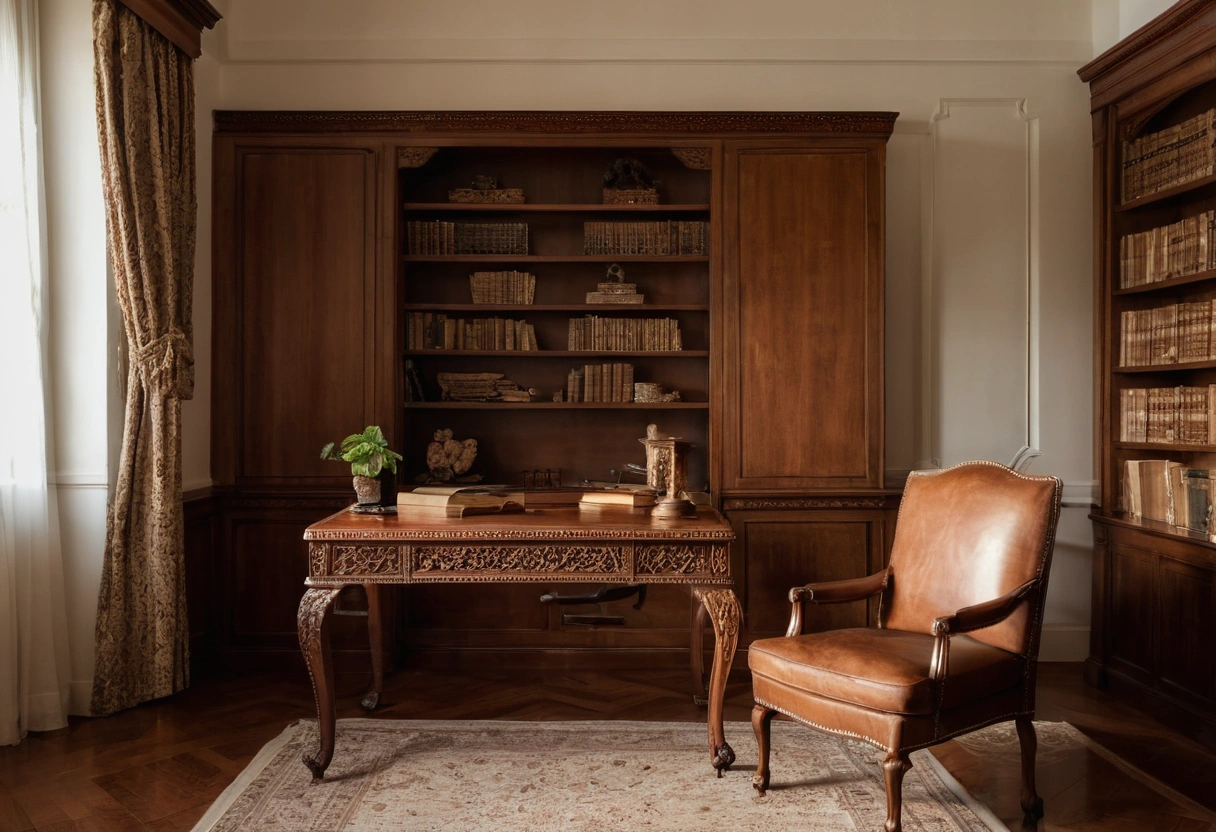
A carved wooden desk, a leather chair and a tall bookcase can look entirely right in a home study, and they signal something a folding table does not. The trouble starts when the furniture was designed for correspondence rather than computers. Solid tops have no cable holes, drawers are sized for ledgers, and the kneehole may be too narrow for a modern chair base.
None of that is fatal. Run cables along the back edge in a fabric sleeve and drop them at one point behind the leg, rather than letting them hang across the kneehole. Use a clamp monitor arm only if the top has an overhang strong enough to take it; otherwise a freestanding stand is kinder to old timber. Put felt pads under printers and lamps. Keep hot drinks off the surface, and the desk out of direct sun, which fades veneer and dries leather faster than any amount of use.
Humidity swings are the quiet problem in coastal homes, since air conditioning cycles on and off and timber moves with it. Leave a hand’s width between a heavy bookcase and an outside wall for air to circulate, and do not wedge antique doors shut against a swollen frame. For anyone furnishing a formal study from scratch, browsing a range such as Classic Furniture Riyadh helps show how a matching desk, chair and bookcase should be proportioned, even if you then buy locally or inherit the lot.
Mix deliberately. One substantial classic piece plus plain modern storage reads as considered. A room full of heavy carved furniture with a plastic pedestal shoved in the corner reads as unfinished.
Where to start this week
Measure the room, mark the door swing and socket positions, and write down the desk depth you need before looking at a single catalogue. Buy the working chair first, then the desk, then lockable storage, and leave the visitor chair until you know how often you will need it. If the licensing and accounting side is still unsettled, sort that alongside the furniture rather than after it, and our guide to when to get professional advice before setting up a business at home explains which questions are worth paying for. Light is next once the desk is in place, and lighting a home office covers glare, task lamps and evening work.