Lighting a home office in the UAE without glare or late nights
Daylight is free and plentiful here, which is precisely why it causes trouble. Here is how to place the desk, choose lamps and set the room for evenings, with somewhere sensible to put everything afterwards.
This is for anyone working at a desk in a UAE flat: freelancers, people running a small booking or travel business from a spare room, and households where the office shares space with everything else. The problems are predictable. Daylight so strong you cannot read the screen by mid morning, video calls where your face is a silhouette, and a ceiling light that leaves you wide awake at midnight. None of it needs rewiring. It needs the desk in the right place, two or three lamps doing different jobs, and somewhere to put them when they are not in use.
Daylight first, and the desk facing the right way
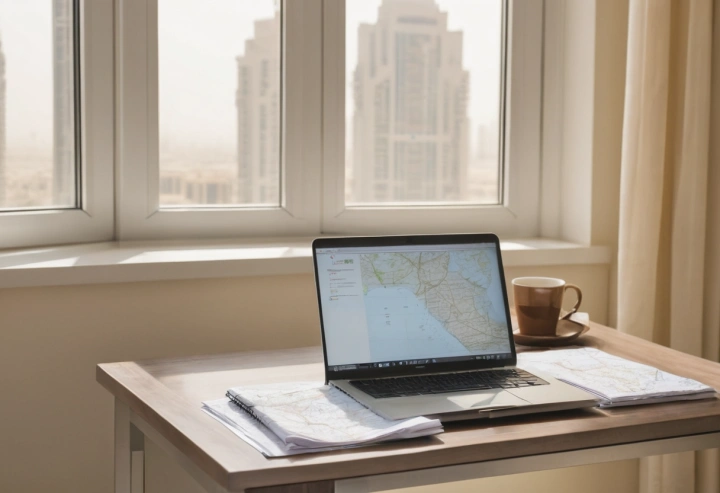
Start with the window: it is the strongest light in the room and the one you cannot dim. The useful arrangement puts the window to your side, roughly at shoulder height when you sit down. Light comes across the desk, your face is lit evenly for calls, and nothing bright sits directly in your field of view.
The two arrangements to avoid are the ones everybody tries first. Sitting with your back to the window puts a bright rectangle behind you, so the camera exposes for the window and leaves you dark. Facing the window head on means squinting all day, and the glass behind your screen turns into a mirror whenever the room is brighter than the display.
If the room allows only one option, take the sideways position even if it means moving the desk away from the socket you wanted. A short extension lead is a smaller problem than a year of headaches. When you plan the layout, our notes on setting up a workstation for long days at a screen cover screen height and chair position, which interact with all of this: raise the screen too far and you tilt your head into the reflection.
Blinds, sheers and what to do about the afternoon
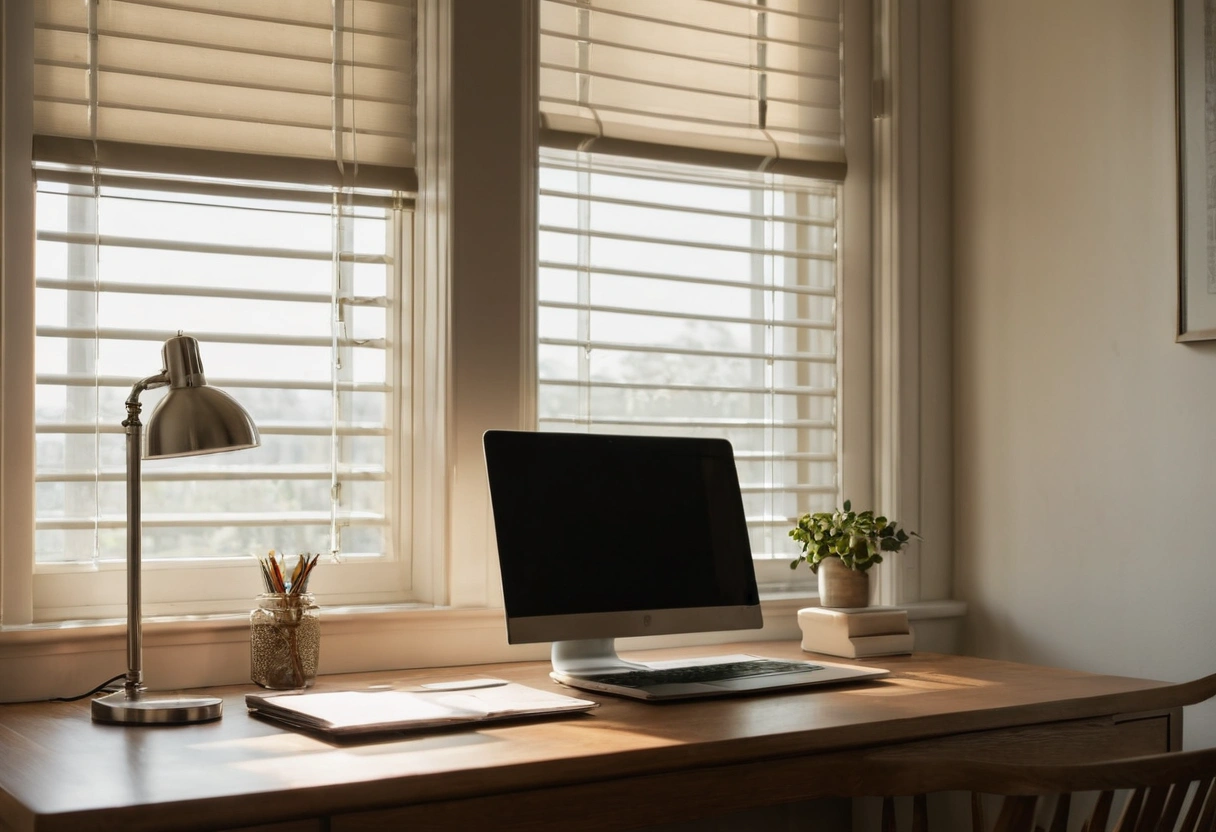
In this climate the sun arrives at an angle for part of the day and then leaves, so a fixed solution rarely works. A sheer layer plus a heavier layer gives you three states: open, diffused, closed. Diffused is the working setting for most of the day. It softens the beam without turning the room into a cave, and it stops the hard patch of sunlight that lands on paperwork and leaves half the page unreadable.
Watch the room for a few days before buying anything. Note when the direct sun crosses the desk, and whether it hits the screen or the paper. Those are different problems. Sun on paper wants diffusion. Sun on the screen usually wants the screen turned a few degrees, or the desk shifted along the wall by a hand’s width or two.
Blinds collect dust faster than anything else in the room, particularly with the windows shut and the air conditioning running. Vacuum the slats with a brush attachment when you do the floor, and wipe the sill weekly. Grime on a sheer panel dulls the light noticeably over a season.
Task lamps: one job each, no overlap
Overhead light alone flattens everything and throws your own shadow onto whatever you are reading. A task lamp fixes that, provided it does one job rather than trying to light the whole room.
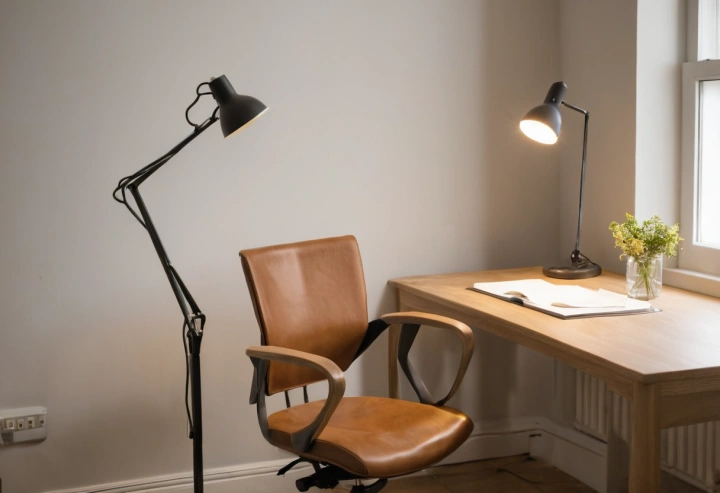
Choose an adjustable arm with a head you can tilt, and place it on the opposite side to your writing hand, so a right handed person puts the lamp to the left. That single decision removes most of the shadow problems people blame on their eyesight. Aim the head at the paper or the keyboard, not the screen, and keep the bulb below eye level when you are seated so you never see the source directly.
A clamp lamp is worth considering in a small flat. It frees the corner of the desk that a weighted base would eat, and it can move to a shelf when the desk becomes a dining table. If you prefer a free standing base, pick one heavy enough that adjusting the arm does not drag the whole lamp across the surface.
A short checklist before you buy:
- The head tilts and the arm holds its position without drooping.
- You can change the brightness, not just switch it on and off.
- The light is warm enough for evening use, or adjustable between warmer and cooler.
- The cable reaches the socket without crossing the floor where you walk.
- The bulb is replaceable, or the fitting is one you expect to keep for years.
Spend properly on the lamp you touch every day and save elsewhere. Our piece on where spending matters in a home office sets out the same logic for the chair and the connection.
Light for the camera, which is a different problem
A room that looks pleasant to your eyes can look dreadful on a call. Cameras dislike contrast. What reads as a bright, airy room often produces a dark face against a blown out window.
The fix is light on your face from the front, slightly above eye level, and soft. A window to your side already does most of this. When it does not, because the call is early or the weather is grey, put a small lamp behind the screen pointing back towards you, bounced off a pale wall rather than aimed straight at your nose. Bounced light is softer and kinder than direct light, and it costs nothing but a wall.
Two things ruin the picture more than anything else. A bright window or lamp behind your chair, and a bare ceiling fitting directly overhead, which puts shadows in your eye sockets. Turn the overhead light off for calls and let the softer sources do the work.
Check the framing on your own screen before an important call rather than trusting the room. Move the lamp until your face is evenly lit and the background is a little darker than you are. That separation is what makes the image look considered.
Evening light that lets you sleep afterwards
Working late in a flat is easy. Switching off afterwards is the hard part, and bright cool light late in the evening makes it harder.
The practical rule is to lower the light and warm it as the evening goes on. After the working day, turn off the overhead fitting and the cool task lamp, and use one or two low lamps at around seated eye level or below. A floor lamp with a shade, a small lamp on a shelf, both warm. The room should feel visibly dimmer than it did at noon. That change is the signal, more than any clock.
Dim the screen to match the room. A bright display in a dark room is its own glare problem, and matching the two reduces the strain considerably. Most machines will shift the display warmer on a schedule; set it once and forget it.
If you must work late regularly, keep the bright task lamp for the paper and leave the rest of the room low. Lighting one small area rather than the whole flat keeps the effect contained, and unwinding afterwards is easier.
Storing it, caring for it, keeping the room usable
In a shared room, lighting has to be packable. Decide where each lamp lives when the office closes: a clamp lamp swung back against the wall, a small camera light in a drawer with its cable coiled loosely, the sheer blind drawn so the desk stops looking like a workplace.
Coil cables in loose loops rather than tight folds around the plug, and use a fabric tie. Tight winding at the plug is where most lamp cables fail. Wipe shades and bulbs with a dry cloth when they are cool and switched off; dust on a bulb dims output and smells when it heats up. Check clamp screws and arm joints every few months, since a drooping arm ends up pointed at your eyes rather than your work.
Keep spare bulbs in one labelled box with the other office consumables, not scattered in kitchen drawers. If you are still furnishing the room, our guide to furniture for an agency run from home covers the storage side in more detail.
What to do next
Before buying anything, spend one working day watching the room. Note when the sun crosses the desk, when the screen becomes a mirror, and when your face goes dark on a call. Write those times down.
Then move the desk so the window sits to your side, and live with that for a week. Only after that, buy the adjustable task lamp, and add a low warm lamp for evenings if the room still relies on its ceiling fitting. Two purchases, made in the right order, will solve most of the problems described here. The rest is dusting.