Starting a travel agency from a spare room in the UAE
Decide what you sell and who you serve before buying anything. Then sort the paperwork, the room and the booking tools, in that order.
This is for anyone in the UAE thinking of selling travel from home: the freelance consultant with a list of former colleagues, the family forever arranging complicated trips for relatives, the person running a small booking business alongside a job. The question is rarely whether the idea works. It is what to decide first, and what the room must hold once real clients, real money and real itineraries arrive.
Decide what you sell before you spend anything
Travel is not one trade. Selling flights for people who already know where they are going is a different business from building slow, complicated itineraries for families, and both differ from arranging group departures, corporate travel for small firms, or inbound visits for friends of friends abroad. Each asks something different of your day and your room.
Flight-heavy work means short bursts of intense attention at odd hours, because fares move and seats disappear. Bespoke itinerary work means long research sessions, documents spread out, and repeated calls with suppliers in other time zones. Group work means lists, deposits, deadlines and endless chasing. Corporate accounts mean invoices, approval chains and a predictable monthly rhythm.
Write down, in plain words, the single thing you will sell first. Not a brochure sentence, an actual description: who asks you for help, what you arrange, how you get paid. Everything downstream, including the furniture, follows from that sentence.
Choose who you serve, then be honest about your hours
A home business lives or dies on whether your working hours match your clients’ hours. If you serve families in the UAE, enquiries arrive in the evening and at weekends, when children are asleep and parents finally sit down. If you serve travellers in Europe or South Asia, your useful calling window may fall while your household eats dinner. If you serve small companies, you are largely on office hours, easier to plan around but harder to fit beside another job.
Pick a client group whose hours you can genuinely keep, then set boundaries you can defend. A published response window beats an ambitious promise you break in the second week. Decide where calls happen, whether you will ever meet clients at home (for most people the answer should be no; video or a hotel lobby is cleaner), and what happens when someone messages at midnight about a missed connection.
One narrow, well-served group beats a broad offer nobody remembers. Repeat business and referrals are the whole economics of a small travel practice, and they come from being known for something specific.
Check the paperwork early, not last
Before you print anything or take a deposit, confirm the position on licensing and registration with the relevant UAE authority, and with the authority for your own emirate or free zone if that applies. Rules differ by activity and by place, and they change. Ask specifically whether your intended activity may be carried out from a residential address, what documents are needed, and what obligations follow once you handle other people’s money.
Ask about insurance and client money handling at the same time. Ask what records you must keep and for how long, because that answer determines your storage, physical and digital. If any of this is unclear, get proper advice rather than guessing; our note on when to get professional advice before setting up a business at home covers the questions worth paying someone to answer.
Do this before buying equipment. People often furnish a room, build a website, then discover the activity needs a structure they have not allowed for. Paperwork first, purchases second.
The room itself
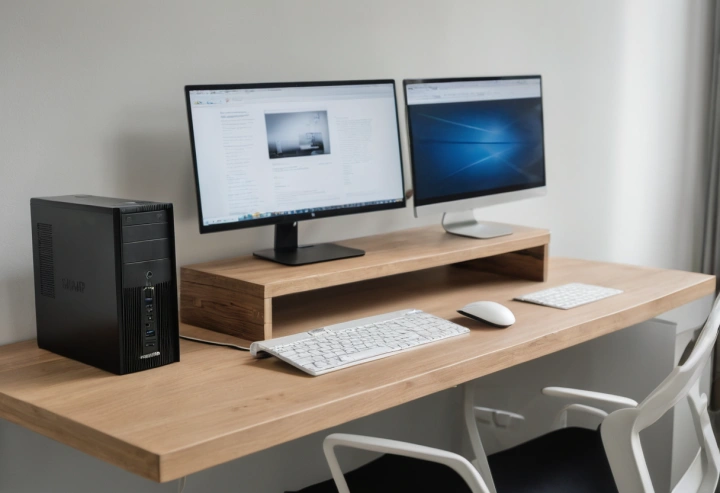
A travel desk needs more surface than most home offices, because the work is comparative. You are holding an itinerary, a supplier’s terms, a passport scan and a price against each other in your head. That argues for a wide desk, a second screen, and a clear stretch of tabletop where paper can lie flat without being buried.
Sit so daylight comes from the side rather than behind the screen. In a UAE flat, a desk facing an unshaded west window becomes unusable by mid afternoon, and glare on a screen full of small fare rules is genuinely fatiguing. An adjustable blind is worth more here than a bigger monitor.
Then think about sound. Supplier calls involve reading reference numbers aloud, spelling names, and repeating dates. A soft furnishing or two, a rug, curtains, a bookshelf, stops the room echoing. A door that closes matters more than a stylish chair, especially if the office shares a wall with a bedroom.
Storage divides into three kinds, and mixing them causes trouble:
- Confidential client material: passport copies, payment details, visa documents. Lockable drawer or cabinet, plus encrypted digital storage with proper access control.
- Working reference: destination notes, supplier terms, printed sample itineraries, maps. Open shelving is fine, kept upright in labelled folders rather than stacks.
- Business records: invoices, contracts, correspondence you may need years later. One box per period, labelled, stored somewhere dry and out of the sun.
Air conditioning does not dry a room as much as people assume, and coastal humidity finds paper. Keep files off the floor and away from external walls that sweat in summer. Our companion piece on designing the workroom itself and separating client calls from household life goes further into layout.
Booking technology, in plain words
Strip away the jargon and only a few things are happening.
A supplier system is where the inventory lives: seats on a flight, rooms in a hotel, places on a tour. A search interface lets you query several of those systems at once and see availability and prices together. When you reserve through it, the reservation is recorded in the supplier’s system and you receive a reference. That reference, not your spreadsheet, is the truth.
A ready-made booking website is software you rent rather than build. It carries your name and colours, but the searching, pricing and reservation machinery underneath belongs to the provider. Customers can look and sometimes book themselves; you handle the exceptions. If you work alone, this is usually the sensible route, and we have written about choosing a ready-made booking platform provider when you work alone from home.
Around those two sit the unglamorous tools that run the business: a shared inbox so nothing hides in a personal account, a simple client record showing who asked for what and when, a calendar with reminders for payment deadlines and passport expiry, a document store with sensible folder names, and a way to take payment that leaves a clean trail.
What this means for the room: a computer that wakes quickly and stays awake, enough memory to keep many browser tabs open without stuttering, a headset with a microphone that makes you sound calm, and a connection that does not drop mid reservation. Backup internet, even a phone hotspot you have tested, is not paranoia when a fare hold is expiring. A small uninterruptible power supply keeps the router alive through a blip.
Care, routines and the next step
Daily habits matter more than the kit. Reconcile bookings against payments at the end of each working day, while you still remember the conversations. Confirm every reservation in writing to the client, with the supplier reference visible. Shred superseded passport copies rather than letting them accumulate. Back up automatically, and check once a season that a restore actually works. Close the laptop lid at a fixed hour, or travel work will fill every waking minute.
Your next step is small and cheap. Write the one sentence describing what you sell and who you serve, then list the questions for the relevant authority about doing it from your address. Only once those two pages exist should you measure the desk space and price a second screen. The room is easy to build once you know what it is for.