Working across time zones from home without waking the house
Early and late calls are manageable from a flat if the light, the sound and the paperwork are handled deliberately. Here is how to set the room and the week so the household sleeps and the work gets done.
This is for people in the UAE whose working day belongs partly to another country: the freelancer with clients in North America, the small booking business serving travellers in Europe and Asia, the household where one person takes a call before dawn while everyone else sleeps. The problems are practical. Light keeps you awake when you need to sleep, sound travels through flat walls, and the week loses its shape. What follows is a way of setting up the room, the hours and the filing so all three stop being daily negotiations.
Why the hours fight the flat
The Gulf sits conveniently between Asia and Europe and awkwardly far from the Americas. A call that suits a client’s morning in California lands in the small hours here. A supplier in Sydney wants your afternoon while you are trying to eat dinner. None of this is unusual, but it means the working day has two halves pulling in opposite directions, and a flat absorbs both.
The common mistake is treating every day as negotiable. If Monday’s late call runs long, Tuesday starts late, Wednesday’s early call is missed, and by Thursday nobody in the house knows when anyone is available. The fix is not discipline in the abstract. It is deciding which parts of the day are fixed and letting the rest bend around them.
Light first, because it decides everything else
The body clock follows light more than intention. Working under bright ceiling light late at night tells you to stay awake for hours after the call ends. Then the early start feels brutal, coffee fills the gap, and the following night is worse.
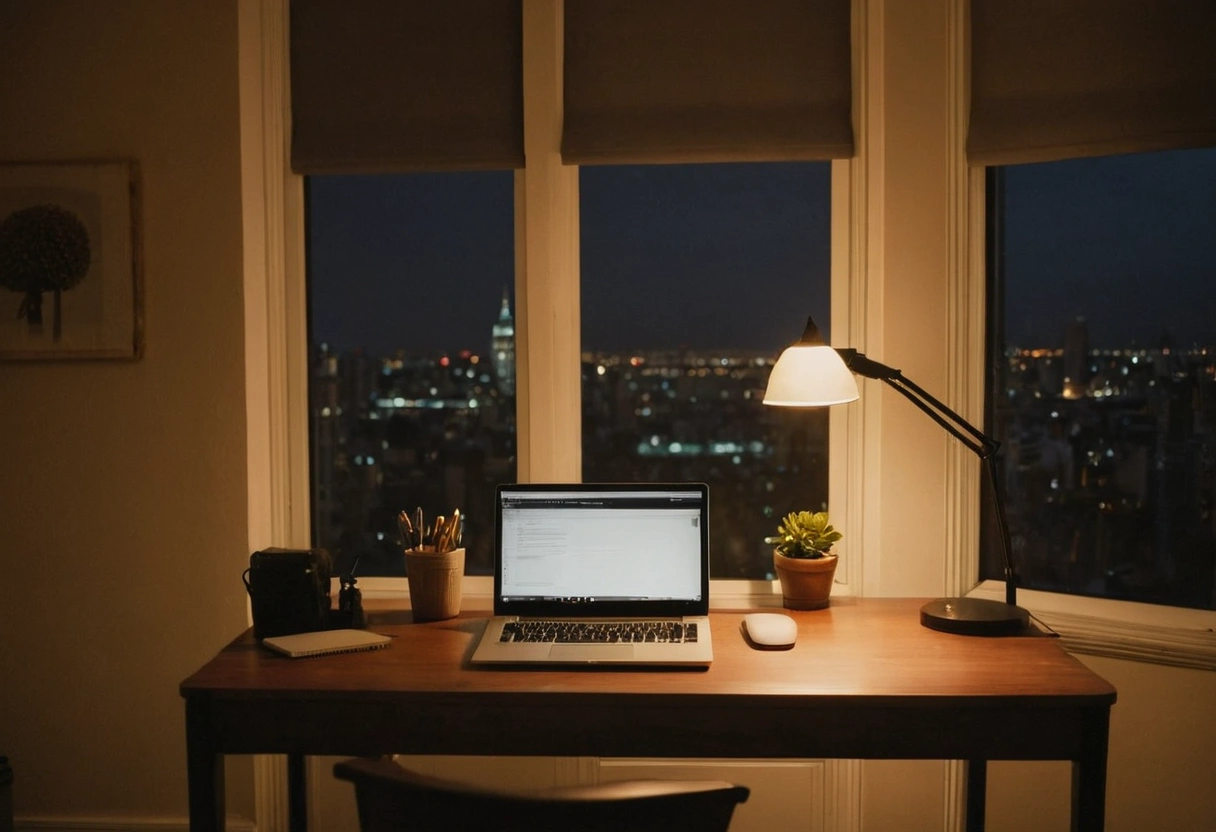
For late work, use one warm lamp placed low and to the side of the desk, not overhead. Turn the screen brightness down and switch the display to its warmer night setting. Keep the rest of the room dim so the desk is a pool of light rather than a lit stage. When the call finishes, close the laptop and leave the room. The walk to the kitchen for water is part of the wind-down, not wasted time.
For very early calls, do the reverse. Get bright light into your eyes soon after waking, ideally daylight at a window or on a balcony, and keep the room bright while you work. In summer the sun rises early enough to help. In winter, or in a flat facing away from the morning sun, a bright desk lamp aimed at the wall does something similar.
Blackout lining on the bedroom curtain matters more than people expect, particularly for anyone sleeping through a bright morning after a late shift. Streetlights and neighbouring towers do not switch off. A cheap eye mask solves the same problem for less effort, and it travels if you end up sleeping in a different room during a heavy week.
Sleep that survives a split day
Pick one anchor block of sleep that happens every night, whatever the calls do. Late work then eats into the evening, early work eats into the morning, but the middle stays put. Splitting sleep into two shorter pieces works for some people and ruins others; try it in a quiet week rather than discovering it during your busiest one.
A short nap in the early afternoon helps before a late call, provided it stays short and early. Napping in the evening removes the pressure that helps you fall asleep afterwards. Caffeine has a long tail: the coffee that gets you through a late afternoon slump is still working when you want to sleep. Set your own cut-off and hold it.
Calls that do not wake the household
Sound in a flat travels through gaps more than through walls. The gap under a door, the shared ventilation, the tiled corridor that carries every footstep. Whispering into a laptop microphone in an open living room is worse than speaking normally into a headset behind a closed door.
Use headphones with a microphone close to your mouth. You speak at ordinary volume, the other side hears you clearly, and the room stays quiet. Soft furnishings help: a rug, a curtain, a full bookshelf, a cushion on the chair. Hard surfaces bounce your voice down the corridor.
A few things to arrange before the first awkward call:
- A door that latches quietly, or a felt pad on the strike plate so it does not click.
- Headphones kept plugged in or charged at the desk, not hunted for at dawn.
- Kitchen things prepared the night before: no kettle, no blender, no cupboard doors.
- A signal on the door that the household understands without asking.
- Phone on silent for personal messages during the call window, with emergency contacts allowed through.
If children are in the flat, the signal needs to be simple enough for them to read and consistent enough that they trust it. Our piece on signals for do not disturb and a shared table for homework covers how to make that stick, including what to do when the door has to open anyway.
A week that holds its shape
Build the week around clusters rather than scattering calls. Two evenings of late calls, held on the same days each week, are far easier to live with than one every night. Early calls belong at the front of the day and should finish before the household wakes properly, or start after everyone has left.
Write the windows down and share them. Clients abroad usually accept a stated overlap window if it is reliable; what frustrates them is unpredictability. Say plainly which hours you cover and offer written updates outside them. Most time zone pain comes from pretending to be always available.
Protect one full day with no cross-zone calls at all. It need not be a day off, just a day worked on your own clock: proposals, accounts, itineraries, the quiet work that never fits between meetings. Without it, every day becomes reactive.
Then keep a hard stop on late nights. Decide the hour at which the laptop closes regardless of what is unfinished, and tell clients that is when you finish. A stop that moves whenever the inbox is busy is not a stop.
Where the travel paperwork lives
Anyone running bookings from home accumulates other people’s documents: passport scans, visa pages, dates of birth, card authorisations, hotel confirmations. Across time zones this piles up overnight, because enquiries arrive while you sleep and the temptation is to deal with them half awake at the kitchen table.
Give that material one home and keep it there. A lockable drawer or a small cabinet for paper, an encrypted folder with a proper backup for digital copies, and a rule that nothing sensitive is left on a shared family computer or printed and forgotten beside the printer. Delete passport scans once they are no longer needed for the booking; keeping everything forever is a liability, not thoroughness.
Storage is also a physical question. A shallow drawer near the desk for live files, a box higher up for closed ones, and clear labels beat a stack that grows until it collapses. If you are still deciding how the business itself should be structured, our guide to the order of decisions when starting a travel agency from home sets out what to settle before the paperwork starts arriving, and it reads well alongside advice on when to bring in professional help.
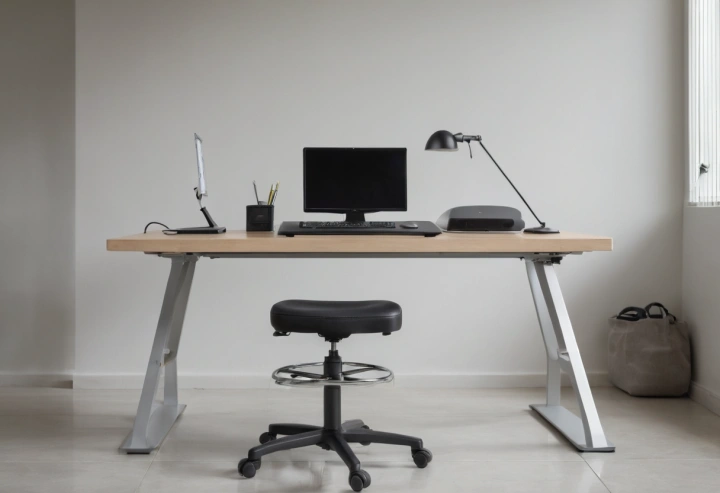
The technology deserves the same restraint. One reliable machine, a second screen if you compare itineraries all day, a headset that works, and a connection you have tested at the hours you use it. Anything more elaborate is optional, and the practical version is covered in our note on the technology layer of a home booking office.
Start with one week, written down
Do not redesign everything at once. Take a sheet of paper and mark next week’s calls in your local time. Look at where they land against the household’s sleeping hours, then move what can be moved and cluster what cannot.
Then change three things in the room: a warm lamp for late work, blackout or a mask for daytime sleep, and headphones that live at the desk. Choose your anchor sleep block and your hard stop, write both where you can see them, and tell the people you work with the hours you cover.
Run it for a fortnight and adjust once, not daily. A routine across time zones holds because it is boring and repeated, not because it is clever.