Serving the public from home without letting work into the house
For booking agents and small home-based businesses whose customers sometimes arrive at the front door. Where visitors go, what stays out of sight, and how to keep the household apart from the working day.
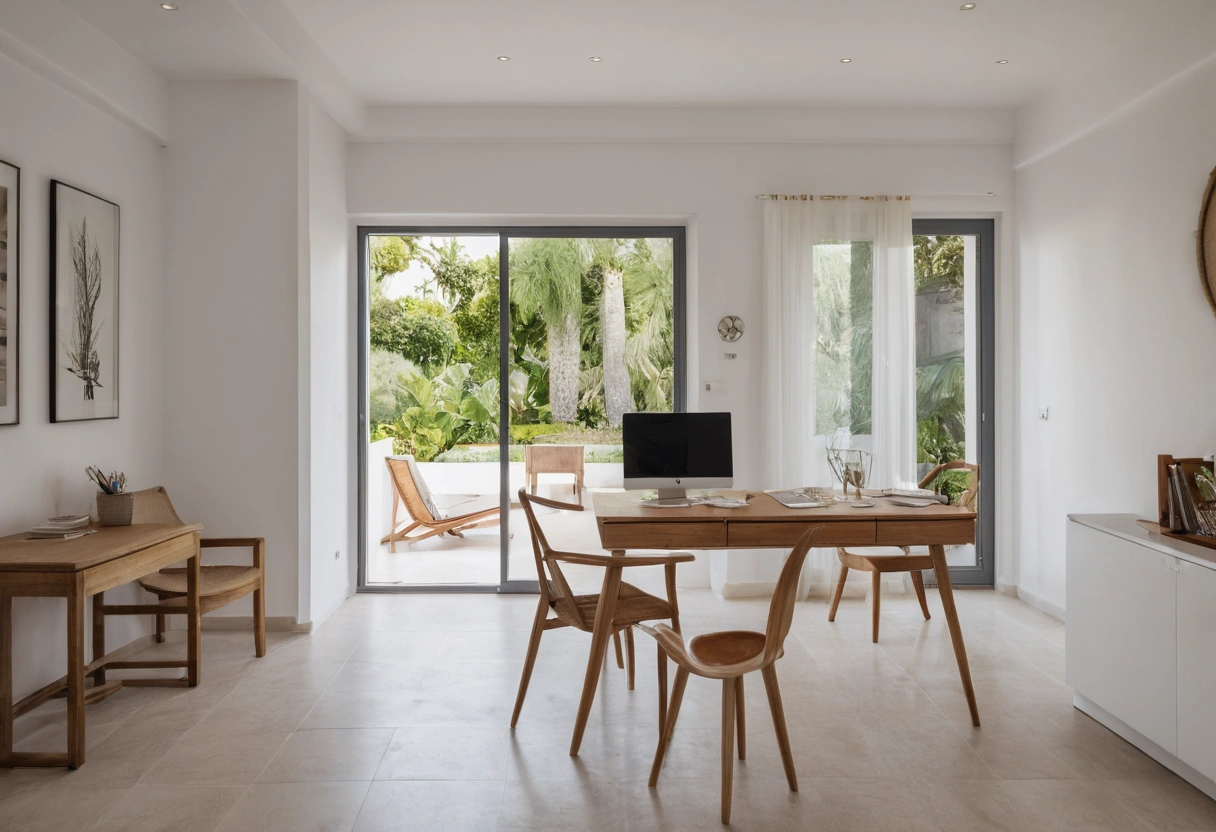
Some home businesses never see a customer. Others have people arriving at the door: a couple collecting printed itineraries, a family handing over passport copies, a neighbour who wants ten minutes about a booking. This is for those households, and for anyone running a booking or travel service from a flat where the front room doubles as an office. The aim is simple. Clients get a professional welcome, and the rest of the house stays private.
Draw the line before the first appointment
Decide which parts of the home a visitor may enter, then arrange the furniture so the decision holds without you enforcing it every time. In most villas the easiest arrangement is a room near the entrance, ideally one with its own door. A majlis or a spare sitting room works well. In a flat, the space nearest the front door is usually the only realistic option, so the boundary has to be a closed door rather than a corridor.
Walk the route yourself, from the gate or the building lobby to the chair your client will sit in. Note what is visible along the way: laundry drying on a rack, school bags, a shoe pile, an open kitchen, a bedroom door standing ajar. Anything on that path is part of your business premises for the length of the visit. Either clear it or reroute around it.
A few things worth settling in advance:
- One entrance for clients, and no reason for them to use another.
- A bathroom they can reach without passing through family rooms, or none at all, with appointments kept short enough that it does not arise.
- Somewhere to put shoes, coats and umbrellas that is not the family shoe rack.
- A closed door between the working room and the living areas, not a curtain.
- Parking instructions sent before arrival, so nobody stands at the gate ringing you.
If children are at home during visiting hours, the same boundary needs a signal they understand. A closed door means do not knock, and a second signal for urgent matters keeps everyone honest. Our piece on working from home with children around covers signals and shared tables in more detail.
Storage and care of client documents
Travel and booking work produces paper that other kinds of home business never handle: passport copies, visa documents, signed forms, insurance paperwork, card authorisations. That material belongs to other people, and a household full of curious children and helpful cleaners is not a safe place for it.
Give it a lockable home. A small filing cabinet or a locking drawer in the desk is enough for most operations, provided the key does not live in the lock. Sort by trip or by client, not by document type, so a single file can be pulled out, handed over and closed again without spreading papers across the table. When a client collects originals, check the file against a list in front of them and get a signature or a message confirming receipt.
Scan what you need to keep, store it in an encrypted folder on a backed-up drive, and shred the paper you no longer require. A cheap shredder sits happily under a desk. Blank forms, letterheads and business cards go in a separate drawer so you are not hunting for them mid-appointment. If you hold passports overnight, they go in the locked cabinet, not in a tray by the printer.
The same discipline applies to screens. A monitor angled towards the client chair should never show another customer’s booking. Lock the screen when you leave the room, even for a minute, and keep the working account separate from the family account on any shared machine. For the equipment side of this, see our guide to the technology layer of a home booking office.
Phone and messaging boundaries
Clients who have your mobile number will use it at midnight, on Fridays and during dinner. The fix is structural, not disciplinary. Use a business number, ideally a second SIM or a landline forwarded to a handset, and publish calling hours wherever that number appears: your website, your email footer, your WhatsApp business profile, your invoices.
Set an away message that names the hours and says when a reply will come. Keep it plain and warm rather than apologetic. Save short replies for the questions that arrive constantly, so answering takes seconds instead of a fresh paragraph each time. Urgent travel problems genuinely happen, so decide in advance what counts as urgent, tell clients the rule, and give them one channel for it. Everything else waits until morning.
During appointments, silence the personal phone entirely and put the business phone face down unless you are expecting an emergency call. Nothing undermines a careful meeting faster than a family group chat lighting up beside the itinerary. If you share a household with someone else who works from home, agree quiet hours for calls and deliveries so neither of you becomes background noise on the other’s meeting. Our article on working across time zones from home deals with early and late calls without waking the house.
A calm setting for video calls
Most client contact now happens on a screen, and the camera frame is the whole of your premises as far as they can tell. Choose it deliberately. Sit facing a window or with daylight coming from the side, never with a bright window behind you. Point the lens at a plain wall, a closed bookshelf or a tidy corner. Avoid a background that includes beds, drying clothes, kitchen clutter, family photographs or an open door to the rest of the home.
Test the frame once and mark the laptop position with a small piece of tape so you can repeat it. Raise the camera to roughly eye level using a stand or a stack of books. Use headphones with a microphone if the room echoes or the household is awake nearby; tiled floors and hard walls carry sound further than people expect. Close the door, switch off the air conditioning while you talk if it rumbles, and mute yourself whenever you are not speaking.
Dress as you would for a client who came to the door. It changes how you speak, and clients notice the difference between someone at work and someone who happened to answer.
Working under someone else’s brand
Readers who arrived here looking for white label travel arrangements are usually asking a related question: if the bookings, the confirmations and the platform all carry another company’s name, what exactly is the home business presenting to the public?
The answer is the service and the relationship. Your letterhead, your invoice format, your email signature, your greeting at the door and your response times are yours, and they should look consistent whether the underlying booking engine belongs to a supplier or to you. Keep a small folder of templates so every document leaves the house in the same shape. Be clear with clients, in writing, about who issues the ticket, who holds the money and who they call when a flight changes. Confusion on those points turns a small problem into a complaint.
Before you sign anything with a supplier or start taking money from the public, check the licensing position for your emirate and your activity, and take proper advice on it. Our overview of starting a travel agency business from home sets out the order of decisions, and when to get professional advice explains which questions belong to an accountant or a business setup adviser rather than to a forum.
Your next step
This week, walk the visitor route from your gate to the client chair and write down every household thing you can see. Fix the three worst items: a door that will not close, a surface covered in family post, a cabinet with no lock. Then set your calling hours and put them everywhere your number appears. Those two jobs cost very little and change how the whole arrangement feels, for your clients and for everyone else living there.