Setting up a travel agency workroom at home
Running a travel agency from home means the workroom has two jobs at once: run a booking business and stay part of a household. Here is how to set it up so both work.
This piece is for anyone running, or about to run, a travel agency from a spare room in a UAE flat or villa. It deals with the room itself: where the desk goes, how to keep client calls out of family life, where the paperwork lives, what sits behind you on camera, and when paying a designer makes sense. If you are still deciding the order of business decisions, start with our guide on how to start a tour or travel agency business from home in the UAE, then come back to fit out the room.
Choosing the room and placing the desk
A travel agency runs on the phone and on video calls, so the quietest room in the home beats the largest one. A spare bedroom with a door that closes wins over a generous corner of the living room every time. If no bedroom is available, our notes on starting an online business from a corner of the living room cover the compromises involved, but expect to work around the household rather than alongside it.
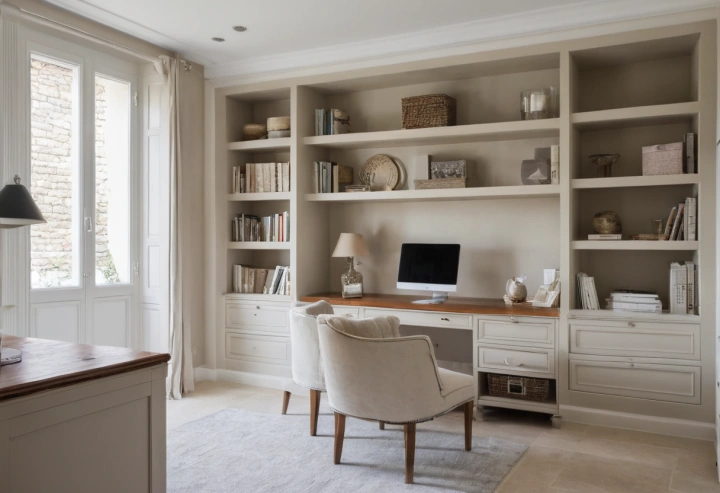
Place the desk so the window is to your side, not behind you. Light from behind turns you into a silhouette on camera; light in your eyes makes you squint through every consultation. Facing the desk towards a wall of shelves gives you storage within arm’s reach and a tidy background in one move. Leave a hand’s width between the desk and the wall so cables can drop cleanly, and check that the chair rolls back fully without hitting a bed or a door. You will stand up and sit down dozens of times a day, and a cramped chair arc becomes a daily irritation.
If you are converting a whole bedroom, layout, door and acoustics are covered in more depth in our piece on converting a spare bedroom into a client-ready home office.
Separating client calls from family life
The hardest part of a home agency is not the bookings, it is the overlap. A client discussing a honeymoon does not want to hear a television or children in the next room, and your family does not want to whisper through every evening call with an overseas supplier.
Three things fix most of this. First, a door that actually closes, ideally solid rather than hollow; a draught excluder at the bottom cuts sound leakage noticeably. Second, soft surfaces: hard floors and bare walls bounce sound around, while a rug, curtains and a full bookshelf calm the echo. Our guide to acoustics for video calls in a home office with hard floors and bare walls explains what to add and where. Third, a schedule the household can see. Agree the hours when the room is used for calls, put them on a shared calendar, and treat the closed door as a signal everyone respects.
Time zones matter in this trade. Suppliers and partners abroad will want calls at awkward hours, so decide early whether late calls happen in the workroom or somewhere that will not wake the house. A headset with a good microphone helps, but it does not excuse a thin door.
Storage for documents and the working archive
A travel agency produces paper and files in equal measure: passport copies, visa documents, signed contracts, insurance paperwork, invoices and printed itineraries. Some of it is sensitive personal data, and all of it must be findable months later when a client queries a booking.
Split storage into three tiers. Live work stays on the desk or in a shallow drawer: current bookings, this week’s itineraries. The recent archive goes in labelled box files on the shelves behind you, organised by month or by client surname, whichever you will actually maintain. Sensitive documents, passport copies and anything with payment details go in a lockable cabinet or a drawer with a key. Open shelves are for reference books and tidy boxes, never for loose client paperwork.
A few habits keep the system alive:
- Label every folder and box on the spine, in the same format, so the shelf reads like an index.
- Scan documents as they arrive and name the file the same way as the paper folder.
- Clear the live drawer at the end of each week, filing or shredding whatever is finished.
- Shred expired passport copies and old payment records rather than binning them intact.
Digital storage deserves the same discipline: one folder structure mirrored on your computer and in cloud backup, with access restricted to whoever genuinely handles bookings. The computer, screens and backup side of this is covered in our article on the technology layer of a home office for a booking or travel business.
A camera-ready background for video meetings
Clients booking expensive trips make judgements from a video call, and the frame behind you speaks before you do. You do not need a studio. You need a plain, calm background with nothing distracting in it.
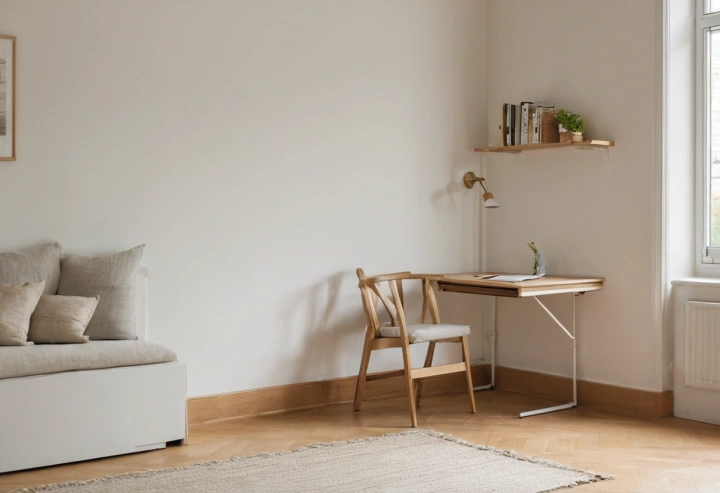
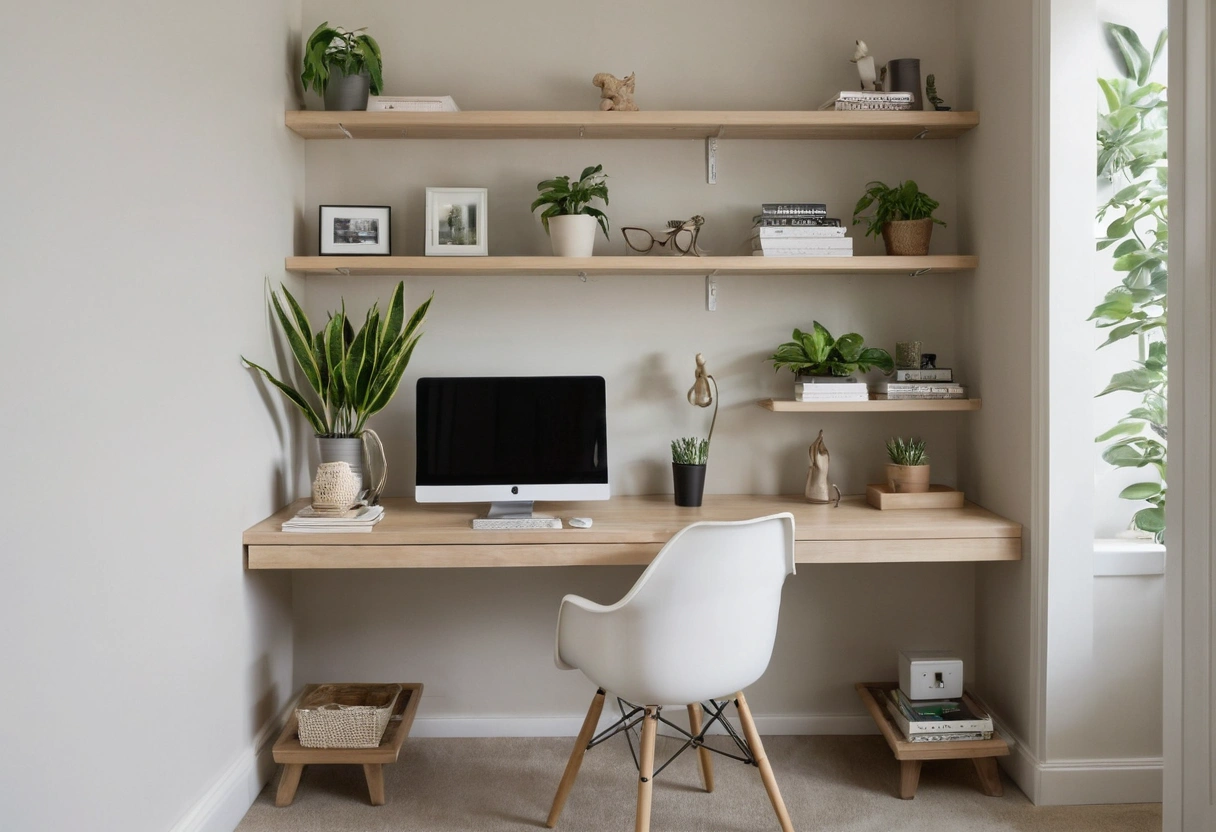
The simplest arrangement is the desk facing those shelves, with the camera looking at a section you have deliberately styled: matching box files, a few books, one plant, nothing personal. Alternatively, face a blank wall in a warm neutral colour and hang a single framed print off to one side. Avoid sitting with a window, a mirror or a busy corridor behind you; mirrors double the visual clutter and corridors invite interruptions on camera.
Check the frame from the camera position, not from your chair. Sit down, open the video app, and look at what the lens sees: crooked shelves, a stray cable, a pile of paper on a side table. Fix those once and the background stays right for months. For lighting, a small lamp aimed at your face from the side of the screen removes the shadows ceiling lights cast under the eyes. Test it in the evening too, since many supplier calls happen after dark.
When to bring in an interior design company
Most home agencies can be set up with furniture you already own, a rug, a lockable cabinet and a weekend of rearranging. Paying for design help makes sense in specific situations: when the room needs built-in storage to work at all, when you are dividing a shared space permanently, when electrics and lighting need moving, or when the room must double as a guest bedroom and the joinery has to earn its footprint twice.
It also makes sense if clients will ever visit. A home agency that receives clients at the door needs the hallway, the seating and the workroom to feel considered, and that is difficult to achieve piecemeal. If you go looking for the best interior design company in Dubai for a compact home office, brief them like a business project, not a decorating job: the hours you spend on calls, the volume of paper you store, the camera angle that must stay clean, and the household traffic the room has to survive. Ask to see how they handle acoustics and cable management, not just finishes. Before committing to any spend on fit-out, take advice on the business setup itself; our overview of when to get professional advice before setting up a business at home covers who to speak to and in what order.
One caution: a designer cannot fix a licensing question or a badly chosen room. Settle the business structure and pick the quietest room first, then spend on the fit-out.
Your next step
Walk into the room you intend to use, sit where the desk would go, and look at it through your laptop camera. Note three things: what the household will hear during a call, what the camera will see behind you, and where a locked drawer could live. Those three notes are your shopping list and your works order. Start with the door seal, the rug and the lockable cabinet this week; the shelves and the styling can follow once the room is quietly doing its job.